


Night shifts can be part of the working pattern, particularly for healthcare workers. Because changes in working hours are studied alongside differences in sleep times, daily routines and patterns of exposure to daylight, shift work has long been a subject of scientific research.
So, are there studies in which aromatherapy practices have been evaluated after a night shift?
Yes. A small-scale study published in the journal Hypertension Research compared measurements taken from healthcare staff working night shifts under different research conditions. One of the experimental conditions in the research protocol included a 30-minute lavender aroma application.
An important distinction needs to be made here: this study is not an aromatherapy guide prepared for everyday use. It deals with experimental measurements carried out under a specific research protocol. The method, duration and form of application used in the research should therefore not be regarded as a usage recommendation for consumers.
Why Is the Night Shift Studied?
Working at night can alter the usual flow of the daily routine. Many elements, such as sleep times, meal patterns, exposure to daylight and social life, may differ according to the shift schedule.
For this reason, shift work is examined across different scientific disciplines under a variety of headings, such as:
- sleep and wake patterns,
- daily biological rhythms,
- working conditions,
- rest periods,
- various physiological measurements
and other related topics.
When evaluating research findings, variables such as participants' age, working pattern, shift frequency, sleep duration and how the study was designed need to be taken into account. It is not possible to draw a general conclusion for all shift workers from a single study.
What Measurement Was Used in the Study?
One of the measurements used in the study is FMD. FMD is short for “flow-mediated dilation”. It is one of the ultrasound-based measurement methods used in scientific research under specific experimental conditions. This measurement should be assessed within the framework of the study's own method and experimental conditions. Researchers may use FMD measurements to compare different research conditions.
How Was the Study Conducted?
Nineteen healthy male healthcare workers took part in the study. Of the participants, 11 were doctors and 8 were technicians.
The researchers carried out FMD measurements under different research conditions:
- On a normal working day without a night shift,
- After a night shift,
- After a 30-minute lavender aroma application carried out following a night shift.
The study also evaluated a control condition in which participants simply rested for 30 minutes without the use of lavender aroma.
This allowed the researchers to compare the measurements obtained under different experimental conditions. The 30-minute application here is part of an experimental protocol set by the researchers. This duration or method does not define how any aromatherapy product should be used in daily life.
What Did the Study Examine?
The researchers compared FMD measurements taken under different working and experimental conditions. The measurements obtained in the study were reported within the framework of its own protocol and assessment method. The findings should be assessed only within the scope of the study's participant group, method, duration and measurement conditions.
At this point, it is not appropriate to attribute any general property, effect or outcome to any aromatherapy product on the basis of a single study on aromatherapy during night shifts.
What Are the Limitations of the Study?
When evaluating a scientific study, it is necessary to look not only at the results but also at how the study was designed. Several limitations stand out in this study in particular.
The Number of Participants Was Limited
The study was conducted with 19 people. Results obtained from a participant group of this size should not be generalized directly to much larger groups with different characteristics.
All Participants Were Male
Only male healthcare workers took part in the study. The study therefore provides no information about what results might be obtained under the same research conditions in different participant groups.
The Assessment Was Short-Term
The study focused on measurements taken immediately before and after a specific experimental condition. Longer-term or repeated applications were not the subject of this study.
Concealing the Application Was Not Possible
Because of lavender's distinctive scent, it was not possible to fully conceal from participants and those taking the measurements which application was being carried out. Methodological features of this kind are among the factors taken into account when interpreting the results of scientific research.
How Much Can a Single Study Tell Us?
In scientific research, a single study rarely has the final word on a topic. Studies conducted with a small number of participants and over a short period in particular can generate new research questions for subsequent work.
The findings obtained in one study may need to be reassessed:
- in different participant groups,
- at different research centers,
- using different methods,
- in larger samples,
- over different follow-up periods
before they can be interpreted more broadly.
For this reason, it is not appropriate to generalize the findings of a single study to all aromatherapy practices or all users. The fact that the researchers described the study as “preliminary observations” is another detail that should be taken into account when assessing the scope of the results.
What to Look for When Reading Aromatherapy Research
When reading scientific studies involving essential oils or aroma applications, evaluating the study as a whole rather than focusing only on the results section offers a more holistic approach.
The following questions can serve as a guide:
- How many people took part in the study?
- Who made up the participant group?
- Was there a control condition?
- Exactly which parameter was measured in the study?
- How long did the application last?
- When was the assessment carried out?
- Has the same topic been examined in other studies?
- Does the method used in the study represent everyday consumer use, or only an experimental protocol?
These questions can help in assessing the scope and limits of a scientific study more accurately.
A Research Protocol Is Not the Same as Everyday Use
The application methods used in scientific studies are determined by the researchers in line with the aim of the study. The fact that a particular aroma, amount, duration or method of application was used in a study does not mean that it is a method or instruction for everyday consumer use.
For the use of consumer products, the key reference is the product label, its intended purpose and the warnings specified by the manufacturer. The application protocol used in a scientific study should therefore not be treated as a recipe for home use.
Knowing the Limits of a Small-Scale Study Matters
This study is a small-scale piece of research comparing FMD measurements obtained under different experimental conditions from a limited number of healthcare staff working night shifts. The research included different experimental conditions. The study should be evaluated solely within the framework of its own research design, participant group and measurement conditions.
No general inference about the properties of any aromatherapy product or about everyday consumer use should be drawn from this study.
When evaluating scientific content, it is important to consider the number of participants, the method, the duration, the control conditions and the limitations of the study alongside its results.
Shop The Story
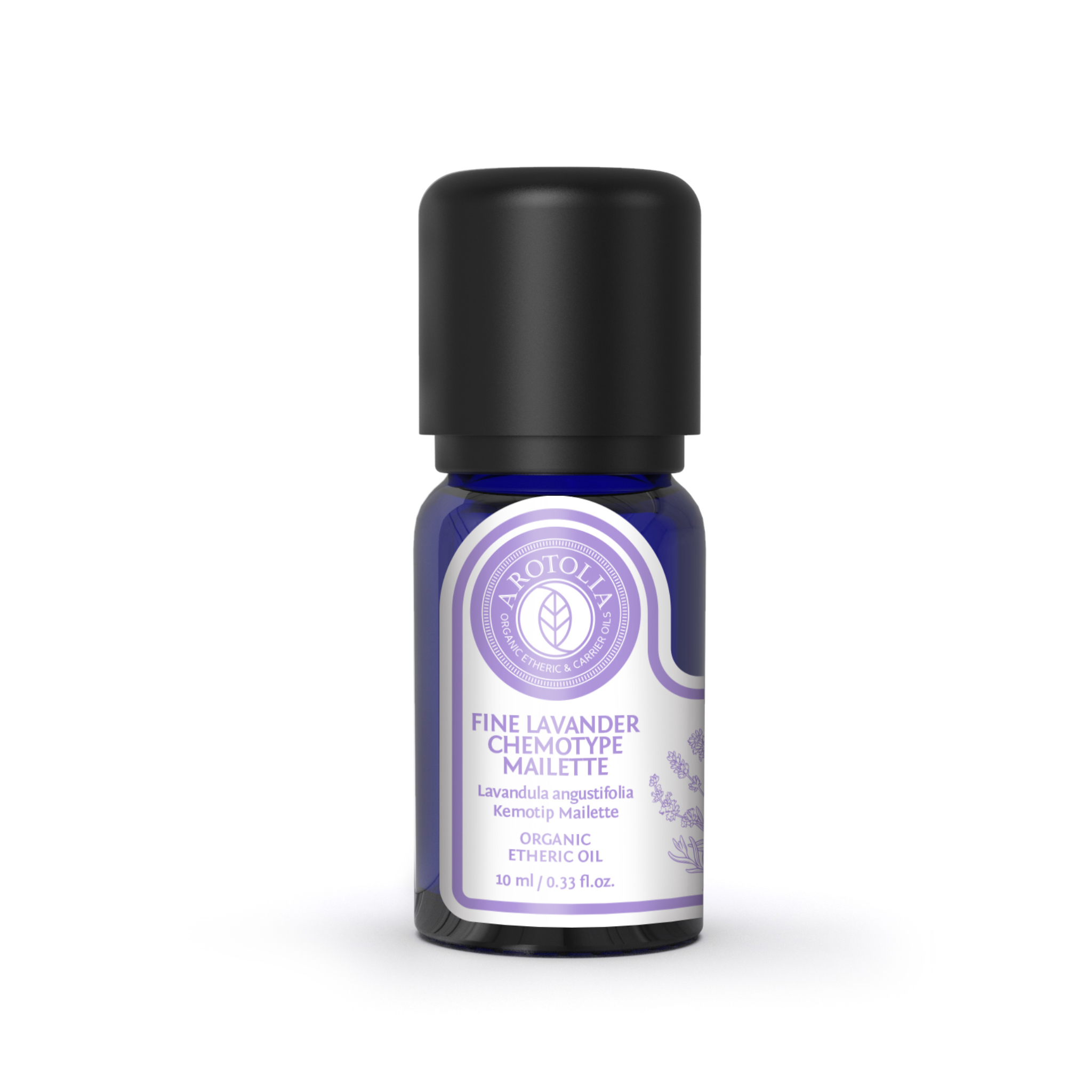
Lavender Mailette Essential Oil 10 ml - FINE LAVANDER CHEMOTYPE MAILETTE
Recent Posts

16 October 2026
Can Virtual Reality and Aromatherapy Come Together?

29 September 2026
What Do Essential Oils Smell Like? Discover Their Scent Profiles
